An itchy ring-shaped rash: fungal skin infection or something else?
A rash is not diagnosed by its shape alone. Why skin assessment matters, how mixed creams can complicate the picture and what to ask at your visit.
General patient information, not an individual diagnosis or prescription. Sources and editorial standards.
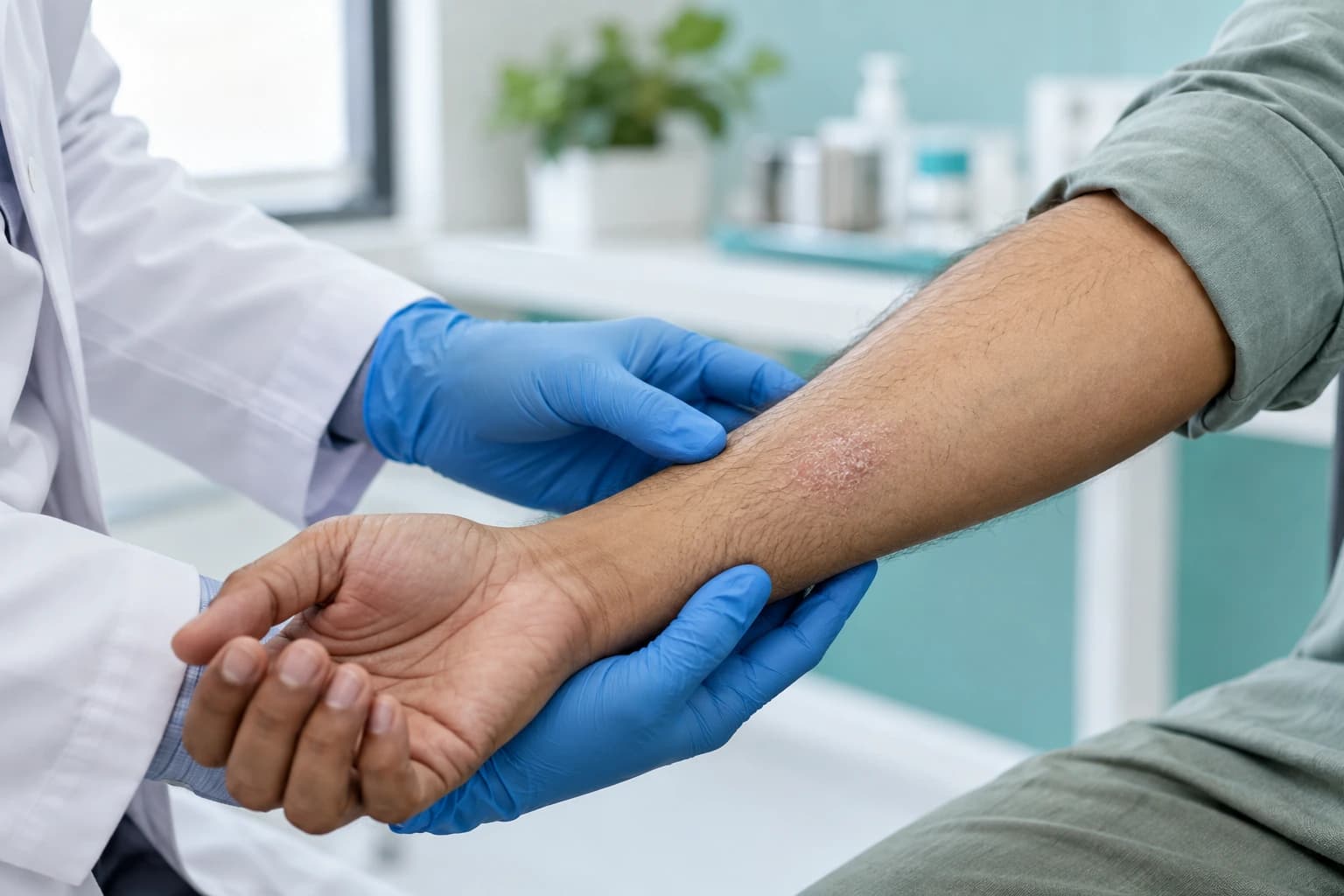
A patch that itches, spreads and looks roughly circular can send you straight to a search for fungal skin infection treatment in Okara. But a ring-shaped rash is a clue, not a diagnosis. Other conditions can look similar, and previous creams can change the appearance.
The safest useful next step is a skin assessment, especially if the rash keeps returning or a treatment has not helped. This guide explains what information to bring and why choosing a cream by its packaging can make the situation less clear.
Ringworm is a fungal infection, not a worm
The NHS ringworm information explains that ringworm is a fungal infection that can affect different areas of skin. A clinician needs to consider the location and symptoms rather than simply match a picture from the internet.
Write down where the first patch appeared, when other areas became affected and whether there are scalp or nail changes. Mention anyone else with similar symptoms, but do not assume they all have the same condition. You do not need to identify the organism before asking for help.
Why the cream history matters so much
The CDC's ringworm treatment guidance warns that steroid-containing creams can worsen ringworm and change the appearance of the rash. This includes some mixed products marketed for general itching.
Bring the actual tube or a clear photograph of the label. Explain how long it was used and what changed. A product that made the rash less red for a short time has not necessarily treated the cause. Avoid starting another steroid-containing mixture on an undiagnosed rash.
If you already have a prescribed treatment, ask the prescriber how to handle any concern rather than changing it on the basis of this article. The point is to make the next clinical decision better informed, not to replace a prescription with a blog recommendation.
Will a test be needed?
The CDC's clinical overview explains that fungal infection can be difficult to distinguish from conditions such as eczema or psoriasis, and testing can help guide care. Ask whether a skin or nail sample is appropriate in your case and what the result would change.
Not every rash requires the same investigation. The doctor should explain why an examination alone is enough or why additional testing is useful. Repeatedly returning to the same unsuccessful treatment without reviewing the diagnosis is a reason to ask more questions.
Practical questions about treatment and household care
Ask which area is being treated, how to follow the instructions and what to do if the rash spreads. Different body sites may need different approaches. Do not assume a skin cream is enough for a scalp or nail problem simply because the same word, fungal, is used.
Also ask about towels, clothing, shared equipment and close contacts in your particular situation. Keep personal items separate while waiting for advice, and do not share prescription tubes. Discuss sports, workwear or sweating if these affect the area or make the plan difficult to follow.
Write the planned review date down. Improvement in itch is useful information, but ask how long treatment should continue and what signs mean you should contact the clinic. Do not extend oral medicines, repeat a course or combine products without clinical guidance.
If it is not fungal infection
An alternative diagnosis is not a failed visit. It is the reason assessment matters. Our guides to eczema and itchy skin and psoriasis describe other consultation questions, not ways to self-diagnose.
Tell the doctor if the affected area is painful, rapidly spreading or associated with fever or feeling unwell. Arrange prompt medical assessment in those circumstances. A routine online appointment request is not an emergency service.
Getting assessed in Okara
Al Aziz Skin Clinic offers skin consultations with Dr. Abdul Aziz Khalid. The practice is opposite Railway Underpass, Sher-e-Rabbani Town, Okara. Contact the clinic or call +92 300 6959395 to request an appointment and confirm availability.
Bring previous product names, dates and photographs if the appearance has changed. The goal is a clear diagnosis and a plan you understand, including what to do if it does not improve. You do not have to arrive with a preferred cream or an explanation for why the rash began.
Sources
Questions about your skin or hair?
Start with a personal consultation.