Psoriasis on the skin or scalp: building a workable care plan
A useful psoriasis plan considers itch, sleep, scalp care and joint symptoms as well as visible patches. Here is a patient-focused consultation guide.
General patient information, not an individual diagnosis or prescription. Sources and editorial standards.
Psoriasis can involve much more than a patch that other people can see. Itch, flakes on clothing, an uncomfortable scalp and disrupted sleep may be the reasons you want help. A useful consultation takes those everyday effects seriously.
If you are looking for psoriasis treatment in Okara, begin with an assessment and a workable long-term plan. A product advertised as a permanent cure should not replace a discussion of the diagnosis, treatment goals and follow-up.
Why diagnosis comes first
The American Academy of Dermatology's psoriasis overview explains that psoriasis can cause thick, scaly patches and is often a long-term condition. It can affect the scalp as well as other body areas.
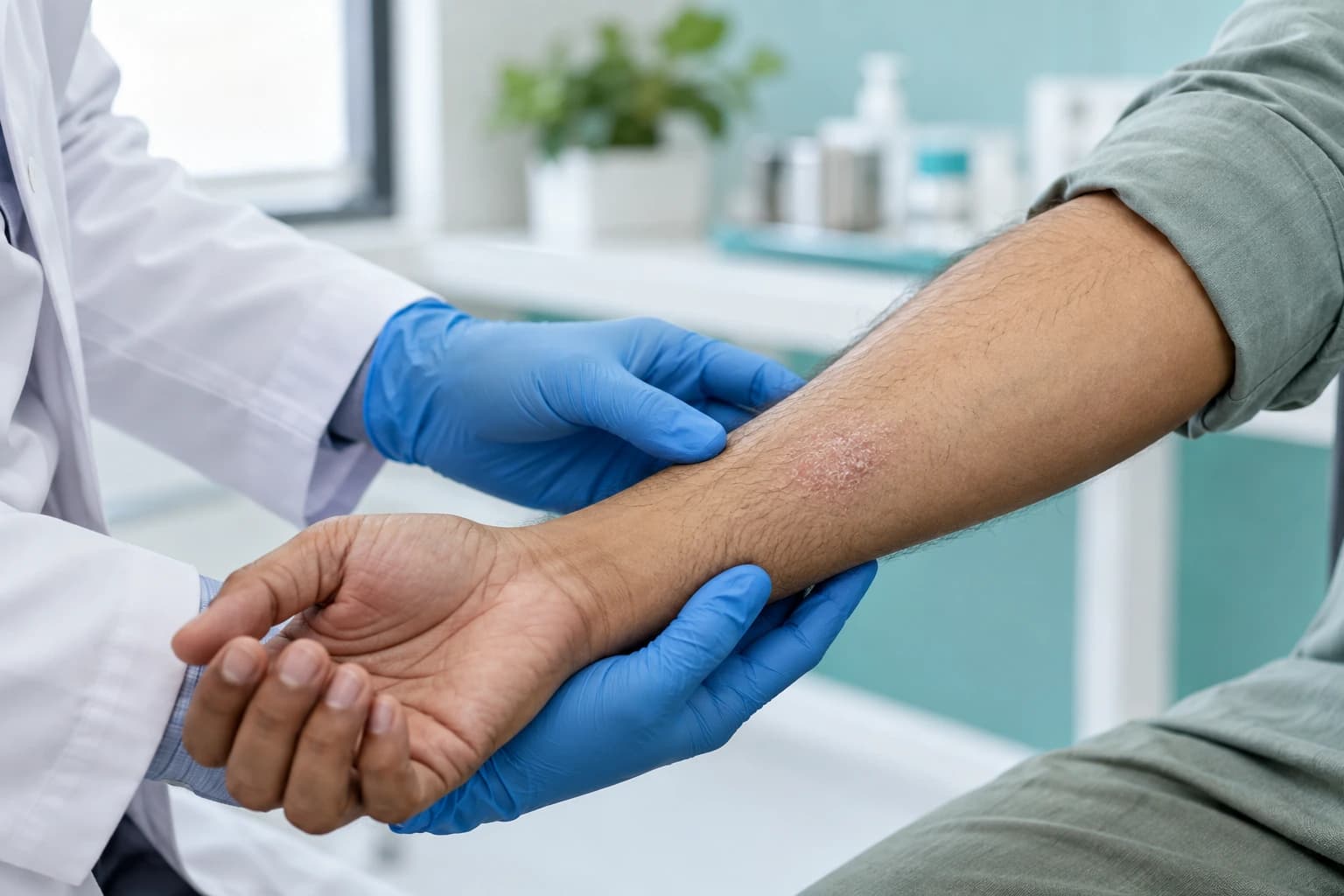
Not every flaky scalp or scaly patch is psoriasis. Tell the clinician how long it has been present, which areas are affected and what previous treatments have changed. Photographs can help describe earlier flare-ups, but an examination is still important.
If someone previously gave you the diagnosis, bring any reports or prescription names. You do not need to repeat testing without a reason; ask what information is already sufficient and what remains uncertain.
Mention the symptoms that are easy to overlook
The NIAMS psoriasis overview notes that some people have related joint symptoms, including stiffness, swelling or pain. Mention these rather than assuming a skin visit should only address visible patches.
Describe nail changes, discomfort and any difficulty sleeping or carrying out daily tasks. If the scalp is affected, explain whether applying previous treatment was practical with your hair and washing routine. A plan that is difficult to use needs a conversation, not a silent struggle.
Also tell the doctor about your general medical history, other medicines and any recent illness. Do not stop treatment for another condition yourself because you suspect a connection.
What should a psoriasis plan cover?
The NIAMS diagnosis and treatment guide describes several treatment categories selected around the type, severity and location of psoriasis. It does not support using one cream for every person or every body area.
Ask which medicine is for which area, how to use it and when the plan should be reviewed. Ask what daily skin care should continue between flares. If another specialist's input is needed, ask what the referral is for and how to arrange it.
Treatment availability must be confirmed by the clinic. A general article mentioning specialist therapies does not mean every therapy is offered at Al Aziz Skin Clinic or is suitable for you.
Make the follow-up realistic
Before leaving, write down your main goals. They may include less itch, better sleep, fewer conspicuous flakes or more comfortable movement. Discuss how the clinician will assess progress and when to call if the plan is not manageable.
Explain your schedule and budget. A scalp preparation that is difficult to use before work or a routine that requires frequent travel may need practical discussion. Ask which steps are essential and how follow-up fits around your commitments.
Keep the medication names with the instructions so you can describe exactly what happened at the next visit. If a product stings or you are unsure where to apply it, contact the practice for clarification rather than changing the plan based on a social-media routine.
Common questions worth asking
- Is the diagnosis clear, or is another skin condition possible?
- Which parts of the plan address the scalp, skin and other symptoms?
- What side effects or changes should prompt a call?
- Do any joint symptoms need further assessment?
- What is the follow-up schedule, and what costs should I expect?
These are ordinary patient questions, not challenges to the doctor. They help you understand a long-term condition and take part in decisions about your care. Avoid expecting an exact cure date or judging progress only by one photograph.
A consultation in Okara
Al Aziz Skin Clinic provides skin condition consultations with Dr. Abdul Aziz Khalid, opposite Railway Underpass, Sher-e-Rabbani Town, Okara. Request an appointment and confirm the current opening schedule before travelling.
If you are unsure whether an itchy rash has been correctly identified, our eczema guide and fungal infection guide offer preparation checklists. They are not diagnostic tests. Seek prompt medical attention for a rapidly worsening, painful or widespread rash with illness rather than waiting for a routine visit.
Sources
Questions about your skin or hair?
Start with a personal consultation.