Hair fall in Okara: why diagnosis comes before treatment
Shedding, breakage, a widening part and bald patches do not all mean the same thing. Prepare for a hair-loss assessment before choosing a procedure.
General patient information, not an individual diagnosis or prescription. Sources and editorial standards.
More hair in the shower can be worrying. So can a widening part, a receding hairline or a new bare patch. Those changes are often grouped together as hair fall, but they are not automatically the same problem and do not necessarily call for the same treatment.
If you are searching for hair fall treatment in Okara, start by arranging an assessment rather than selecting injections, supplements or surgery from a menu. Knowing what is happening to the hair is the basis for a useful plan.
Describe the change in ordinary terms
You do not need technical language. Tell the doctor whether you notice shedding, short broken hairs, gradual thinning or a clearly defined patch. Explain when it began and whether the scalp feels itchy, painful or uncomfortable.
Bring earlier unfiltered photographs if they help show the timeline. Similar lighting and hair positioning are more useful than edited before-and-after images. Mention what has changed in your health, medicines, diet or hair routine, but do not assume any one change proves the cause.
Why an examination matters
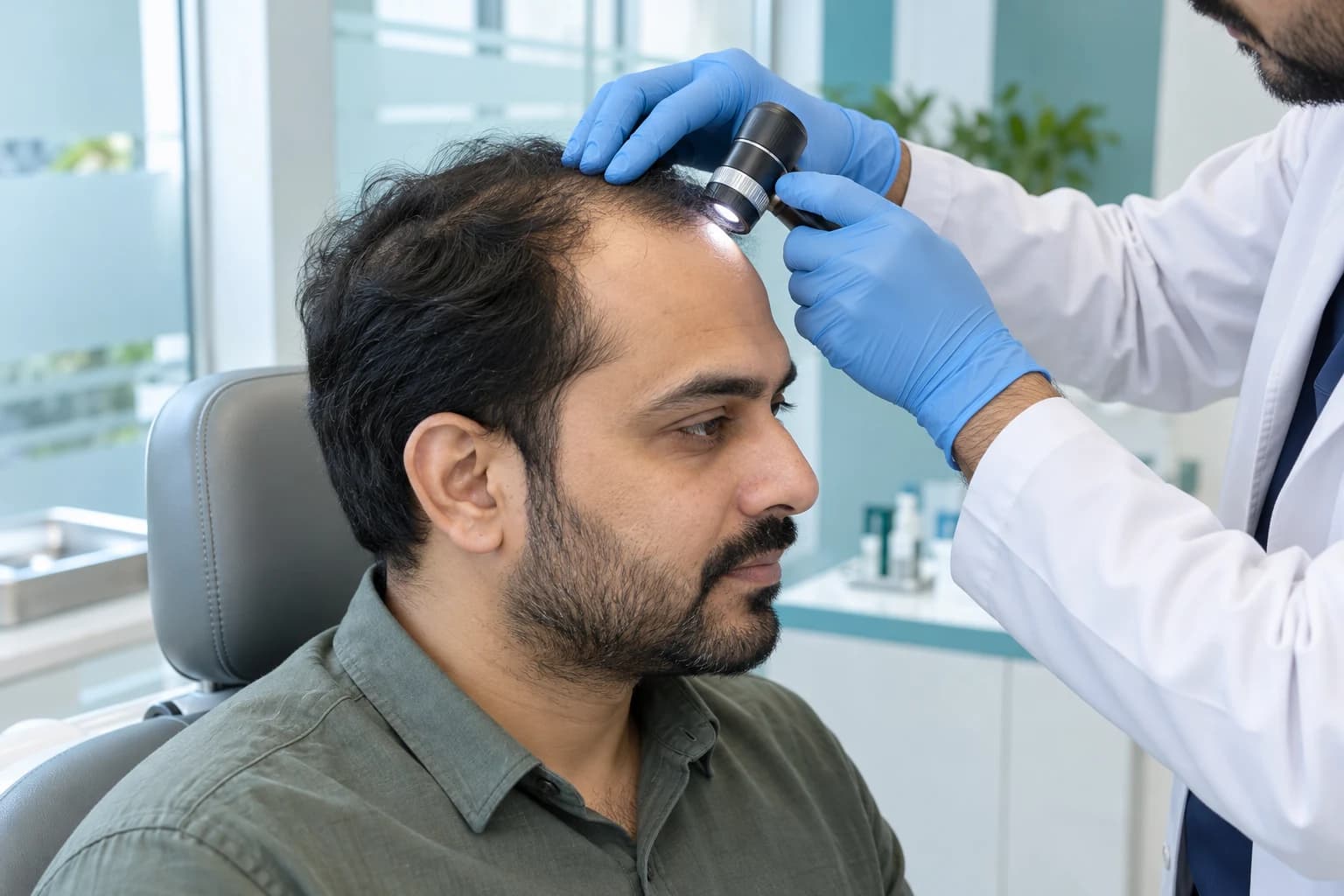
The American Academy of Dermatology's hair loss assessment guidance explains that a clinician considers the history and examines the scalp and hair. Tests may be recommended when a suspected cause needs investigation; not everyone needs the same set of tests.
Ask what the clinician is looking for and what any proposed test would clarify. If you already have results from another doctor, bring them. Avoid buying a large laboratory package before the consultation simply because a social-media checklist recommends it.
Make a complete treatment history
List tablets, supplements, scalp lotions, shampoos, oils and previous procedures. Include names, approximate dates and whether you noticed a benefit or an unwanted effect. If you stopped something, explain why.
Tell the clinician about prescription medicines for other conditions and any relevant medical history. Do not stop a necessary medicine because you think it may affect hair; discuss that concern with its prescriber. Likewise, supplements are not automatically useful just because they are marketed for stronger hair.
Ask whether a product's role is to address the suspected cause or simply improve the way hair feels. Those are different goals. It should be clear which parts of the plan are essential and which are optional.
Where do procedures fit?
The AAD's male-pattern hair loss guidance describes treatment options for a particular diagnosis. It is not a reason to assume every person with shedding has male-pattern hair loss or should follow that regimen.
Al Aziz Skin Clinic lists hair restoration consultations. Ask which options are appropriate for your diagnosis, what evidence supports them, what risks apply and how long the commitment might be. A procedure being listed does not establish that it is the right next step for everyone.
If surgery is raised, our hair transplant consultation guide focuses on donor hair, long-term planning and recovery. If the scalp is inflamed or painful, make sure that concern is addressed rather than treating the visit solely as a cosmetic appointment.
Define a sensible review point
Ask what changes to look for and when the plan should be reassessed. The outcome you want may be reduced shedding, improved coverage or understanding why a patch appeared. Explain that priority so you and the clinician are discussing the same goal.
It is reasonable to ask about the expected total cost, including review visits and any ongoing treatment. Ask what would happen if the initial approach did not help. You should not need to keep switching between unrelated products without a clear way to judge progress.
Do not rely on a fixed growth guarantee, a graft number selected without examination or a single highly edited result photograph. Ask for the explanation behind the recommendation and take time to consider it.
Getting help locally
Dr. Abdul Aziz Khalid sees patients at Al Aziz Skin Clinic, opposite Railway Underpass, Sher-e-Rabbani Town, Okara. Contact the practice to request an appointment, or call +92 300 6959395 and confirm availability before travelling.
Bring the timeline, previous treatment names and any relevant reports. Keep sensitive medical details for the consultation rather than sending a full medical record through a public form. The useful first step is an explanation of the problem and a plan matched to it, not a promise that every kind of hair loss can be reversed.
Sources
Questions about your skin or hair?
Start with a personal consultation.