Considering a hair transplant in Okara? Start with these questions
Donor hair, long-term planning, recovery and realistic density should be part of every surgical consultation. A checklist before committing to treatment.
General patient information, not an individual diagnosis or prescription. Sources and editorial standards.
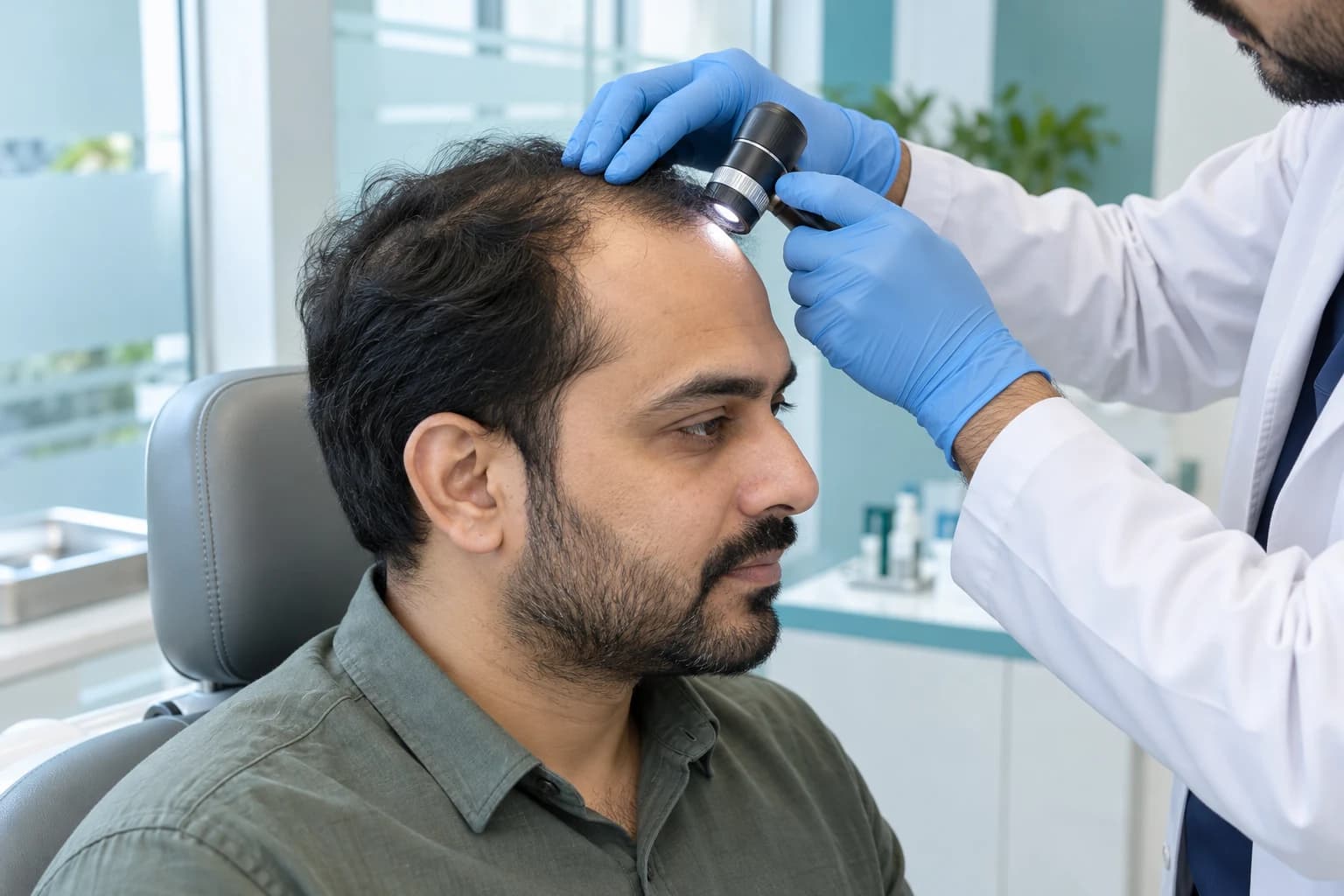
A hair transplant is a surgical decision, not just a booking for a certain number of grafts. If you are considering a hair transplant in Okara, the most important early conversation is about suitability, donor hair and what a sensible long-term result could look like.
Al Aziz Skin Clinic offers hair restoration consultations with Dr. Abdul Aziz Khalid. This guide gives you questions to ask before agreeing to surgery. It does not determine your suitability or predict an individual result.
Establish the cause of hair loss first
A receding hairline, sudden shedding and a new bald patch may require different assessments. If you have not yet discussed the cause, read our hair loss consultation guide. Surgery should not replace that conversation.
Bring information about previous hair treatments, other medicines and general health. Explain your priorities: perhaps the hairline matters most, or perhaps you are concerned about the crown. You do not need to arrive with a graft count or a hairline copied from someone else's photograph.
Ask about donor hair and realistic coverage
The American Academy of Dermatology's transplant guide explains that suitability depends on factors including healthy donor hair and the ability to grow hair in the receiving area. Expectations should be discussed after an examination.
Ask the surgeon how the donor area affects the plan. What level of coverage is realistic? How would future thinning affect the design? Would delaying surgery or considering another approach be sensible? These are more useful questions than asking for the maximum number of grafts.
Discuss the hairline from several angles and consider how it may look as you age. Ask for the reasoning behind the proposed design. A consultation should allow room for your preferences while explaining the limits of what can be achieved.
Understand the proposed technique
Ask for the name of the technique, how donor hair will be collected and what scars or changes might remain. The NHS hair transplant information describes different surgical methods and emphasises that surgery has risks, including bleeding, infection and scarring.
Ask who is responsible for each stage, how the surgical team is supervised and what anaesthesia arrangements are proposed. Do not select a technique only because the name sounds newer or because an advertisement calls it painless or scarless.
Mention previous unusual scars, allergies and medical conditions. Ask whether anything needs checking before the procedure. Do not stop a prescribed medicine or begin a pre-surgery product without instructions from the appropriate clinician.
Recovery should fit your real schedule
Explain your work, exercise, travel and family commitments. Ask what restrictions the surgeon recommends, how to care for the scalp and when review visits will be needed. You should receive written aftercare, not just a verbal reminder as you leave.
Ask which changes are expected during recovery and which should prompt contact. Find out how to reach the clinic if a concern develops outside ordinary hours. A routine website form is not the right route for an urgent postoperative problem.
If you travel from outside Okara, ask about the practical arrangements before booking. Avoid scheduling the procedure immediately before an important event without discussing the recovery period and the time needed to assess growth.
Discuss the full commitment and cost
Request an individual estimate and ask what it includes: consultation, procedure, medicines, aftercare, follow-up and any future review. This article does not provide a price because the clinical plan must be established first.
Ask whether ongoing hair-loss management may still be recommended. A transplant plan should consider the surrounding hair rather than only the day of surgery. Ask what would happen if your expectations were not met and how concerns are handled.
Take time to consider the information. Before-and-after images can support a discussion, but ask whether they show comparable circumstances and are used with patient permission. They do not guarantee your result.
Requesting a consultation in Okara
Explore the hair restoration service and contact Al Aziz Skin Clinic, opposite Railway Underpass, Sher-e-Rabbani Town, Okara. Call +92 300 6959395 to confirm appointment availability.
A useful consultation leaves you understanding your suitability, the proposed design, risks, alternatives and follow-up. Choosing not to proceed immediately is also a valid outcome. The aim is a decision you understand, not pressure to commit to a package on the first visit.
Sources
Questions about your skin or hair?
Start with a personal consultation.