Loading page…
Dental implants in Queens Village, NY.
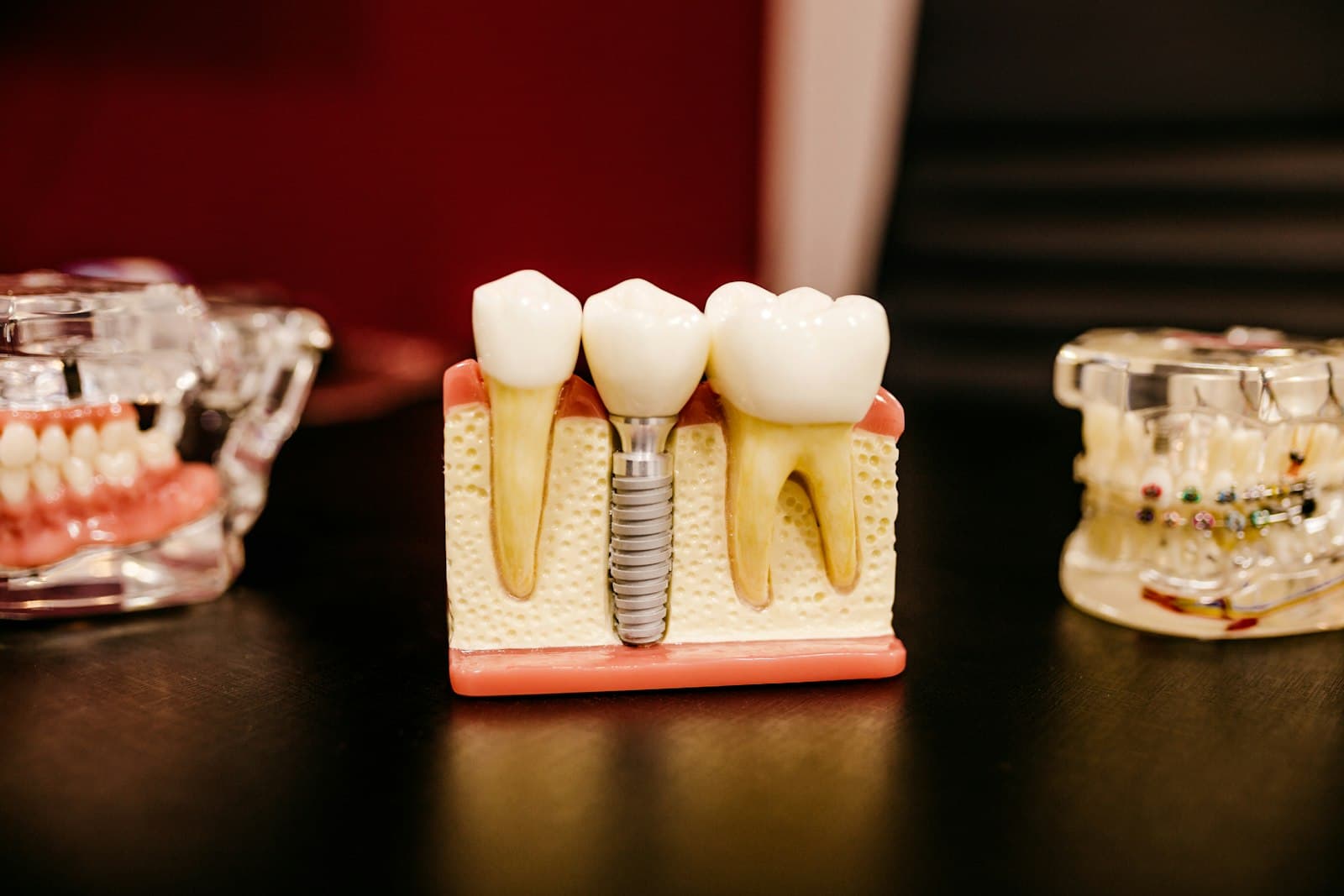
A dental implant replaces a missing tooth from the root up: a small titanium post integrates with your jawbone, and a custom crown on top looks, feels, and chews like your own tooth. Implants don't slip like dentures and don't require grinding down neighboring teeth like bridges.
- Looks, feels, and functions like a natural tooth
- Preserves jawbone and facial structure
- No impact on neighboring healthy teeth
- Decades-long track record of success
5.0 · 772+ reviews
Implants may be a good fit if you
- Have one or more missing teeth
- Have a tooth that can't be saved and needs to come out
- Are tired of a loose or uncomfortable partial denture
- Want a replacement that doesn't rely on neighboring teeth
- Have avoided smiling or chewing on one side because of a gap
What to expect at your visit
- 1
Consultation and planning
An exam and imaging check bone levels and gum health, and map the ideal position for the implant.
- 2
Implant placement
A small titanium post is placed in the jaw under local anesthetic, taking the place of the tooth root.
- 3
Healing
Over the following months the bone bonds to the implant, creating a foundation as strong as a natural root.
- 4
Your new tooth
A custom crown, shaped and shaded to match your smile, is attached to the implant.
Why implants are the closest thing to a natural tooth
An implant replaces the root as well as the visible tooth. That means it is fixed in place, you brush and floss it like your other teeth, and it helps keep the jawbone healthy where a tooth is missing.
Unlike a bridge, an implant doesn't need neighboring teeth to be reshaped for crowns, and unlike a removable denture it won't slip when you talk or eat.
Who is a candidate
Most healthy adults with a missing tooth can have an implant. Enough bone and healthy gums are needed; if bone has been lost, grafting can often rebuild it first. Smoking and uncontrolled diabetes can affect healing, so we'll talk through your health history at the consultation.
Cost and financing
Implant treatment is priced per case because it depends on the number of teeth, bone health and the final restoration. Some dental plans contribute toward implants. You'll get a written treatment plan and estimate before you decide.
Queens Village Dental Care is at 214-81 Jamaica Ave, Queens Village, NY 11428, and welcomes patients from Queens Village, Bellerose, Hollis, Cambria Heights, Floral Park, Jamaica and across Queens. Hours and directions
Dental Implants: common questions
Am I a candidate for implants?
Most healthy adults are. We evaluate bone volume with imaging and review your health history. Even patients told 'no' years ago are often candidates with today's techniques.
How long does the process take?
Typically three to six months start to finish, and most of that is quiet healing time while the implant fuses with bone. Each visit itself is straightforward.
Do implants hurt?
Placement is done under local anesthesia and most patients report less discomfort than a tooth extraction, managed with over-the-counter medication for a day or two.
How long do dental implants last?
With good home care and regular checkups, the implant itself can last for decades. The crown on top may eventually need replacing from normal wear.
Does getting an implant hurt?
Placement is done under local anesthetic. Most patients describe the soreness afterwards as milder than an extraction and manage it with over-the-counter pain relief.
How long does the whole process take?
From placement to final crown is typically a few months, mostly healing time. You won't be left with a visible gap in the meantime.